Overview of Karnataka’s “Responsible Digital Use” draft policy
Responsible Digital Use” draft policy
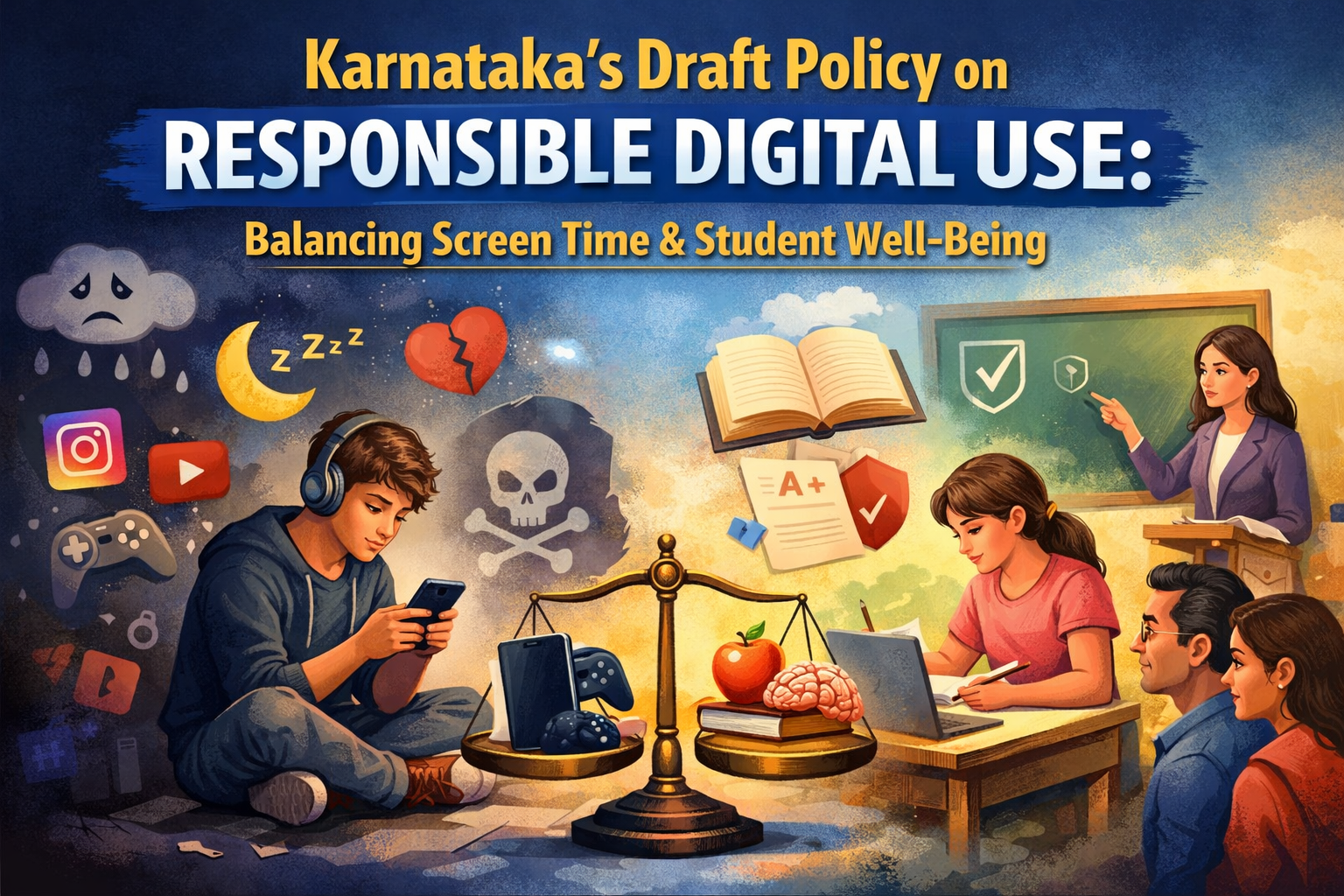
In today’s digital age, students’ lives have become closely tied to smartphones, social media, and online gaming. After the COVID-19 pandemic, when schools and colleges shifted to online classes, students’ screen time increased significantly. As a result, issues such as digital addiction, mental stress, lack of concentration, and decline in academic performance have been growing at an alarming rate. This has further led to mental health problems, sleep disturbances, academic decline, and social isolation.
In this context, the Karnataka government, in March, presented a budget proposal for 2026–27 in which Chief Minister Siddaramaiah proposed banning social media use for children below 16 years of age. Following this, in April, a draft policy on responsible digital use was released. This policy is not just a set of rules; it is an important step towards protecting the mental health and intellectual development of future citizens.
In this article, I will explain the background of this draft policy, its objectives and goals, its advantages and disadvantages, what other governments and countries are doing on this issue, and also share my views along with insights from experts. I have previously written several articles on cybercrimes affecting children; you can read them on my bilingual blog.
The Risks of the Digital Age and the Need for a Policy :-
Today, a common scene in almost every Indian household is a child using a mobile phone or tablet while eating, before sleeping, or immediately after waking up. After school, many children spend hours on Instagram, YouTube, or online gaming. This is no longer just a concern for parents—it has now caught the attention of the government as well.
Excessive use of digital technology has led to serious social issues such as mental stress, academic decline, social isolation, and cyber risks. According to data from NIMHANS, about 25% of adolescent students in Karnataka show signs of internet addiction. Along with this, problems like sleep disorders, anxiety, depression, loneliness, and poor academic performance are increasingly visible. Cases of cyberbullying, unhealthy body image, and even online sexual exploitation by strangers are also rising.
From a parent’s perspective, many are caught in a dilemma: “If we don’t give a phone, the child misses online learning; if we do, they spend hours watching reels.” This is a common struggle in many middle-class families.
Recognizing this situation, the Karnataka government took an important step in the first week of April 2026. The Department of Health and Family Welfare, along with NIMHANS, released a draft policy on responsible digital use among students. Health Minister Dinesh Gundu Rao introduced the policy to the media. The policy is still in the draft stage and is open for public feedback.
Objectives and Goals of the Draft Policy :-
This draft policy mainly targets students in Classes 9 and 10, as well as those in higher secondary classes (11 and 12). It is not just about banning mobile phones; instead, it provides a comprehensive framework to promote digital well-being through the combined efforts of schools, teachers, parents, and the government.
The policy has been developed by the Department of Health and Family Welfare in collaboration with NIMHANS and the Education Department. Its main aim is to ensure students’ safety in the digital world and to reduce mental stress caused by excessive technology use.
Key Goals of the Policy :
- To promote digital well-being and emotional resilience among students
- To protect students from cybercrime and online misuse
- To create awareness about digital literacy, cyber safety, mental health, and responsible online behavior as part of the school curriculum
- To reduce digital addiction among students
- To train teachers and parents to identify early signs of digital addiction and provide support
- To guide proper use of digital tools for educational purposes
- To establish digital safety and well-being committees in every school
- To build cooperation among parents, teachers, and students
- To limit recreational screen time to a maximum of one hour per day
- To restrict internet usage after 7 PM
- To encourage age-appropriate phone and app design, along with Aadhaar-based age verification
For the policy to succeed, parents must regulate technology use at home, schools must implement support systems, and the government must provide guidelines, funding, and monitoring.
Advantages of the Draft Policy :-
1. Focus on Student Health
The policy is designed keeping in mind both mental and physical health. Excessive screen time affects eyesight, sleep, and emotional well-being.
2. Control of Digital Addiction
It aims to reduce the growing addiction to gaming and social media among students.
3. Collaboration Between Parents and Schools
The policy encourages joint responsibility between parents and schools in managing students’ digital use.
4. Protection Against Cyber Risks
It focuses on preventing cybercrimes and online threats faced by students.
5. Emphasis on Education
When used correctly, digital tools can improve the quality of learning.
Concerns and Criticisms :-
1. Fear of Over-Control
Some experts believe the policy may lead to excessive control over students by the government and school authority.
2. Implementation Challenges
Differences between urban and rural schools may make uniform implementation difficult. Hence even if it is forcefully implemented, the level of implementation may not be same.
3. Impact on Digital Learning
Restrictions on mobile usage may affect access to digital education as most of the quality content is present in YouTube and other digital platforms.
4. Lack of Awareness Among Parents
Not all parents are digitally literate, which could reduce the effectiveness of the policy. Even if they are literate they themselves were not educated on proper digital usage.
5. Increased Burden on Teachers
Teachers are already managing academic, administrative, and extracurricular responsibilities. Adding monitoring of digital usage and mental health may be challenging.
Global Comparison: What Other Countries Are Doing :-
Different countries have already taken strict measures:
- China: Has imposed strict time limits on gaming and social media use for children. It has also limited the use of AI in schoolwork to less than 10%.
- South Korea: Runs “digital detox” camps to tackle smartphone addiction. The “Shutdown Law” restricts late-night gaming.
- European Union (EU): Through AI regulations, it has banned technologies that exploit children’s psychological vulnerabilities. Strict school-level digital policies are in place.
- United States: While rules vary by state, there are increasing legal actions against social media companies due to mental health concerns. Some states have banned mobile phones in schools.
What Experts Say About This Policy :-
Education experts say that completely banning technology is not the solution. Instead, students should be taught how to use technology responsibly. Psychologists emphasize that parents should lead by example by reducing their own screen time. Spending quality time with children and openly discussing their online activities is very important. Teachers believe that including digital literacy in the curriculum will empower students. Policy analysts point out that awareness programs are especially needed in rural areas; otherwise, the gap between urban and rural regions will widen.
Final Thoughts :-
In the digital age, it is not possible to completely keep students away from screens. However, teaching them responsible usage is absolutely essential. If implemented properly, Karnataka’s draft policy can bring positive changes in students’ lives. For this policy to succeed, the government, schools, and parents must work together as a team. Real change cannot come through laws alone—it requires social awareness and self-discipline. Only then can we ensure a healthy digital future for our children.
