More Dangerous than the Iran war are these Cyber Frauds
On February 28, 2026, the United States and Israel launched a joint bombing raid on Iran. That very night, a software employee in Mangaluru received a WhatsApp message: “Oil prices will triple due to the Iran war. Buy crude oil futures on this app now and earn lakhs”. After clicking that link, he lost ₹3 lakh in just two days. This is not a fictional story. Across Karnataka and the rest of India, hundreds of people are falling victim to similar scams every day.
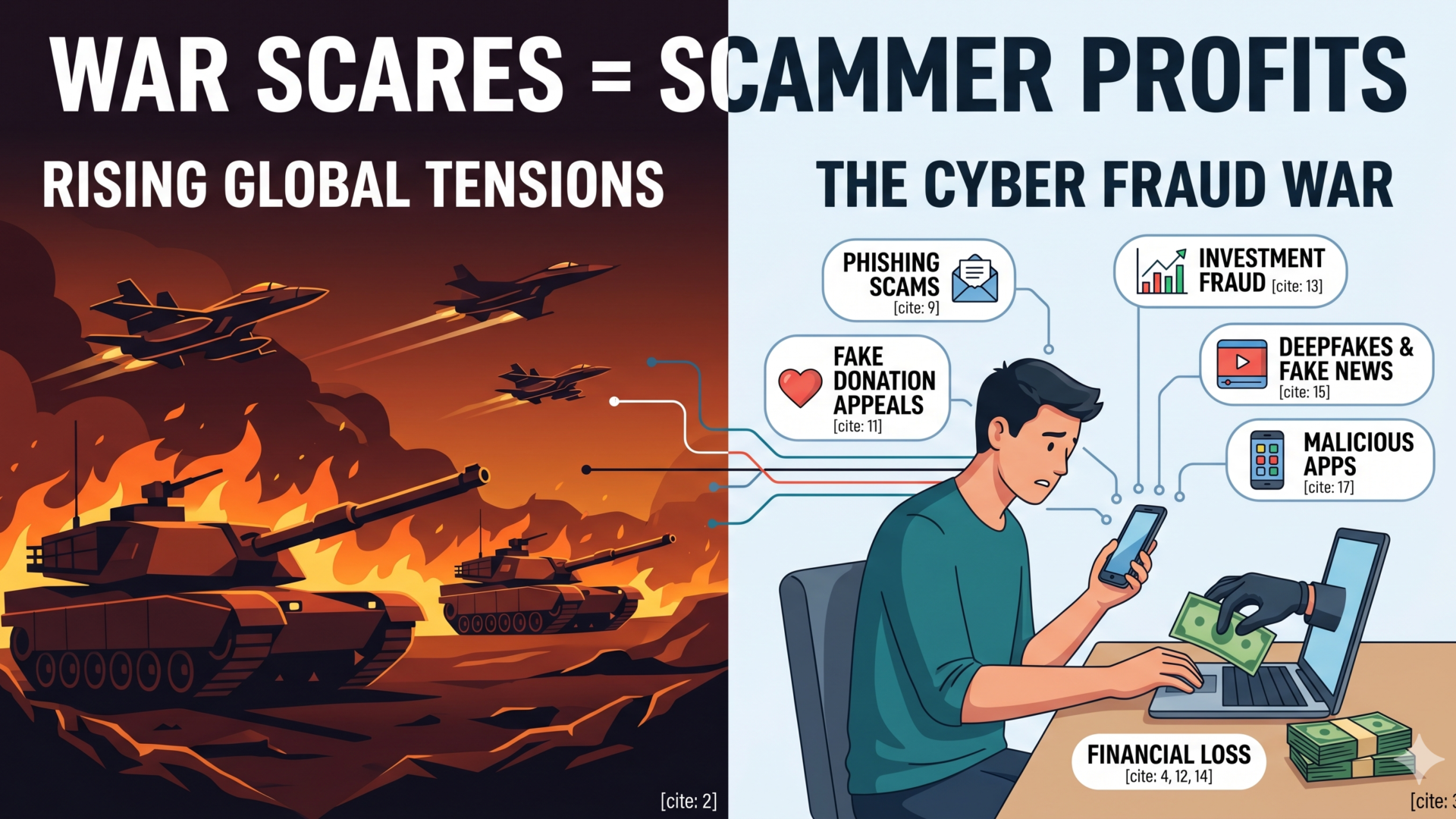
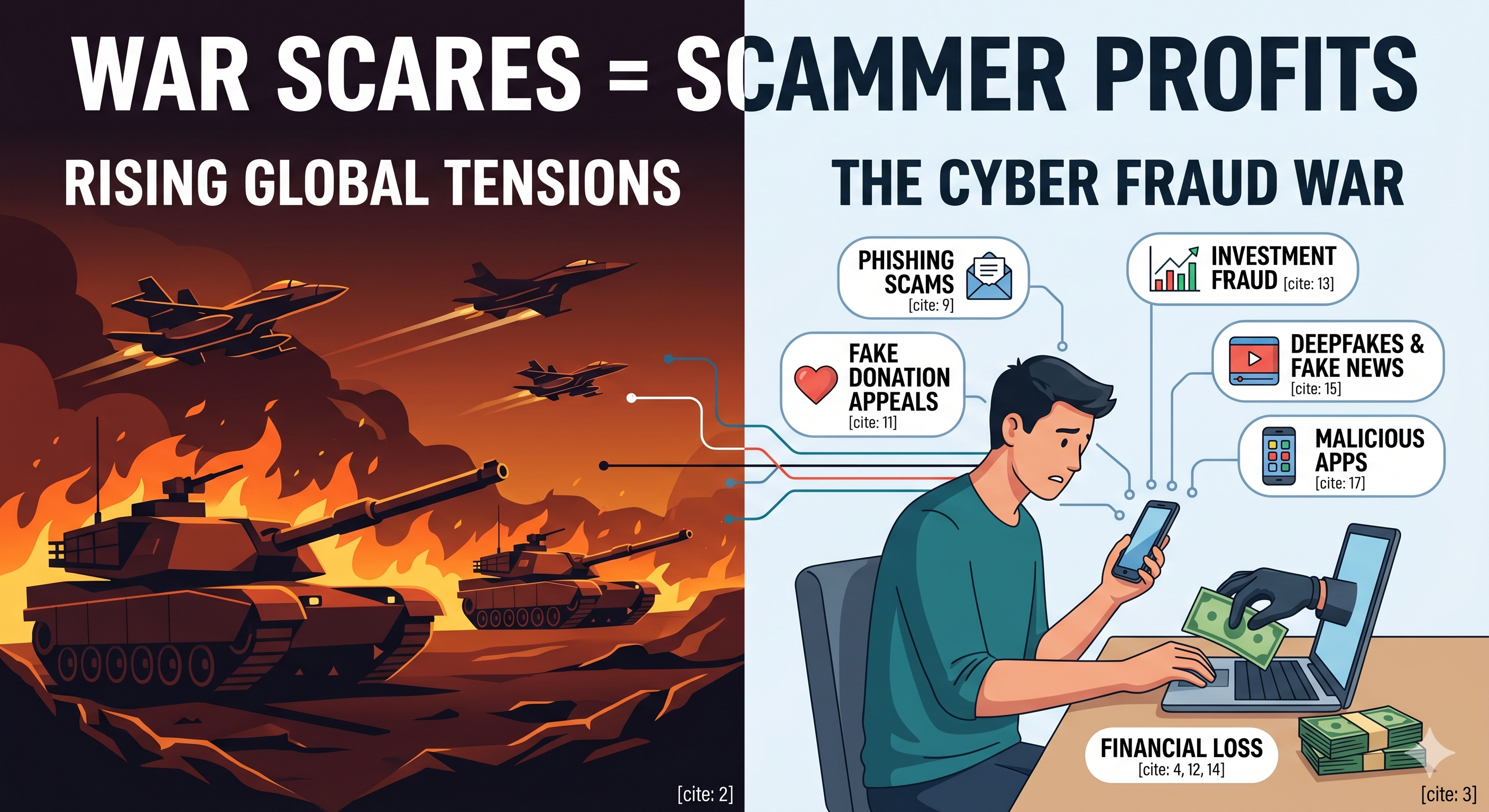
While tensions between Iran, Israel, and the US are escalating abroad, cybercriminals are capitalizing on this war to target ordinary citizens with various digital crimes. They are using the fear and uncertainty created by the war to target ordinary citizens with sophisticated cyber frauds. This article explains the different cyber scams being perpetrated in the name of war, how you can protect yourself, and what to do if you become a victim.
Major Cyber Scams Conducted in the Name of Iran War :-
- Phishing Crimes: People are receiving SMS or emails claiming things like “Check your bank account security” or “Your travel is cancelled due to the impact of war”. Clicking the links in these messages can infect your mobile with viruses, leading to the theft of private information or money.
- Fake Donation Collections: Messages are spreading via WhatsApp and Telegram asking to “Help those injured in the war” or “Donate to the people of Iran”. This money never reaches the needy; it goes directly into the scammers’ accounts.
- Investment Frauds: Messages circulate claiming “Oil/gold prices will rise, invest in this trading app to double your money”. These fake apps, promoted on Facebook, WhatsApp, and Telegram groups, show small initial profits before swallowing your entire investment.
- Deepfakes and Fake News: Social media algorithms are constantly showing terrifying deepfake videos and fake news about the war, pushing us into a whirlwind of anxiety. These can frighten people to the point of desperation.
- Malicious Apps: Applications are spreading under names like “war news alert app” or “US-Iran Conflict Tracker”. Once installed, hackers gain access to your SMS, OTPs, and banking information.
How to Stay Safe from Such Scams :-
- Always follow the principle of “Zero Trust, Patience, and Verification” for all digital transactions. Only respond after thorough verification.
- Avoid answering calls from unknown numbers. If it is an emergency, they will leave a message or a voicemail.
- Use a highly-rated call-blocking app to identify and block spam calls.
- If you receive a suspicious call, hang up immediately. Only answer after verifying the source or by calling back a verified number.
- Do not click any links, scan QR codes, or install applications sent by strangers.
- Regularly monitor your banking transactions and report any unexpected activity immediately.
- Only provide sensitive information like Aadhaar, PAN, account numbers, CVV, or OTPs after extreme scrutiny and only when absolutely necessary.
What to Do If You Are a Victim of such Cyber Fraud :-
- Immediately call the 1930 Cyber Helpline, file a complaint at cybercrime.gov.in, or visit your nearest police station.
- Contact your bank immediately to report the incident. Request to temporarily block your accounts and cards, and change your passwords/PINs.
- If you have shared your Aadhaar details or copies, lock your Aadhaar card via the official UIDAI website or the mAadhaar app.
- If you suspect your device is infected with malware, back up your essential data and perform a factory reset.
