Why Seeing Policy Prices Shouldn’t Cost Privacy
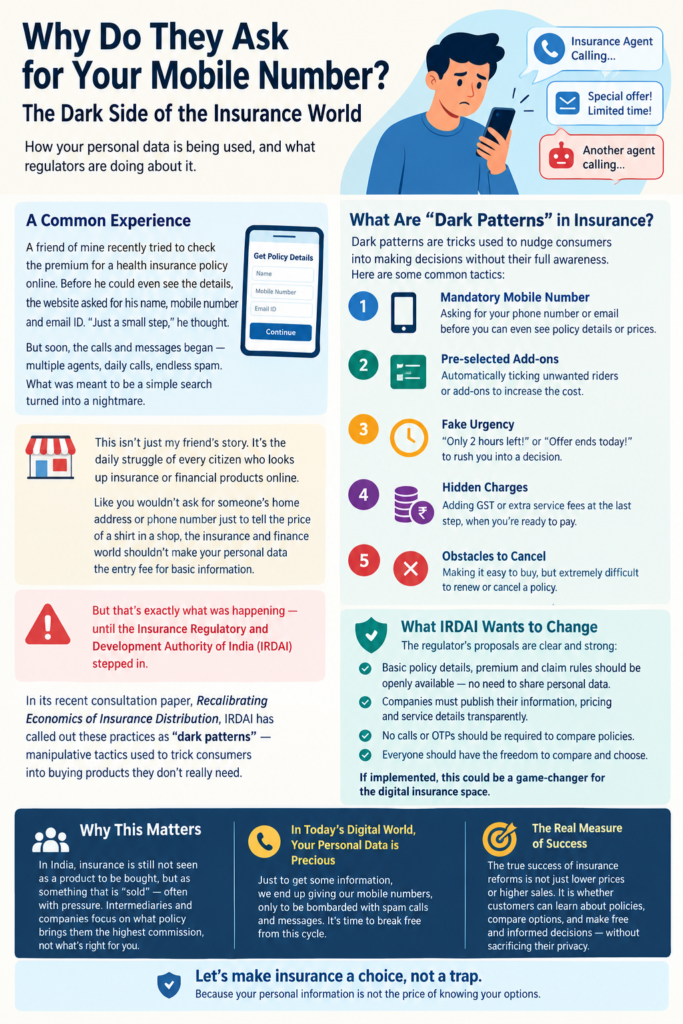
Just last week, a friend phoned me in sheer exasperation, “What a mess, my friend,” he vented. “I just wanted to check the premium quote for a health insurance plan online. But before displaying a single policy feature or price, they demanded my name, phone number, and email ID. Out of sheer curiosity, I entered my number—and that was my biggest mistake! Now, four different sales reps call me every single day, paired with an endless barrage of spam SMS. I cannot even enjoy a peaceful dinner anymore!”
This is hardly an isolated complaint. It reflects the daily ordeal of almost every consumer navigating financial products online.
The Unspoken Market Distortion: Data as an “Entry Fee”
Imagine walking into a clothing store to see how much a shirt costs. Would you expect the shopkeeper to demand your home address or mobile number before flipping over the price tag? Absolutely not. The bedrock principle of any transparent, competitive marketplace is simple: consumers have an unconditional right to know product specifications and pricing upfront.
Yet, in the digital ecosystem of insurance aggregators and broker platforms, this basic principle has been turned upside down:
- Policy brochures, exclusions, and premium charts were hidden behind high-friction data gates.
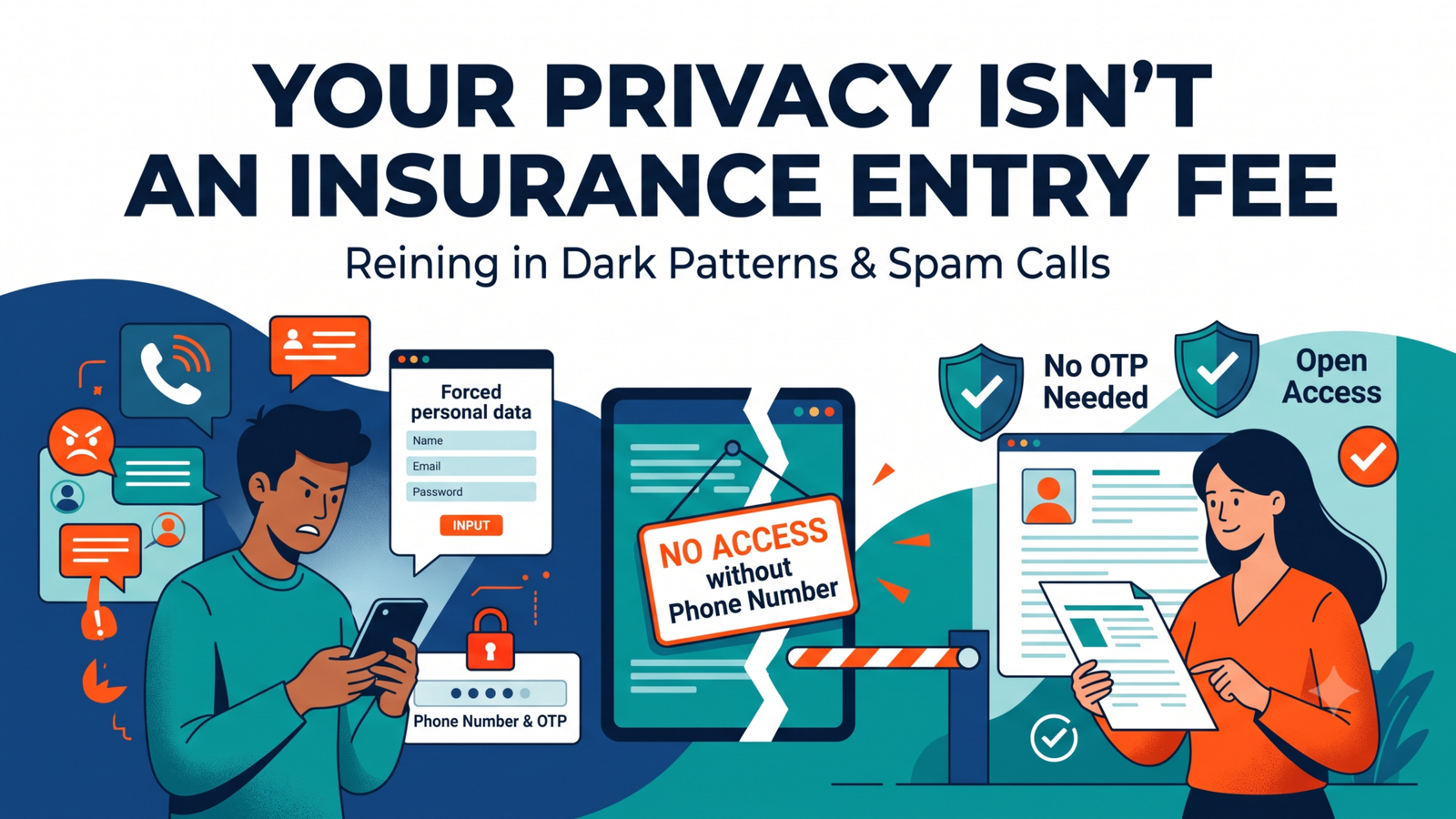
- Consumers were forced to pay an intangible “entry fee”—their personal privacy and contact credentials—just to explore available options.
- The second you clicked “Submit,” you ceased to be an exploring consumer and became a targeted “sales lead” routed straight to aggressive call-center queues.
What Has IRDAI Proposed?
India’s insurance regulator, the Insurance Regulatory and Development Authority of India (IRDAI), has stepped in to dismantle this practice.
In its consultation paper titled “Recalibrating Economics of Insurance Distribution,” the regulator took explicit aim at these digital manipulation tactics, classifying them as Dark Patterns.
Under the proposed framework:
- Zero-Friction Access: Core policy benefits, terms, calculators, and claim procedures must be published openly.
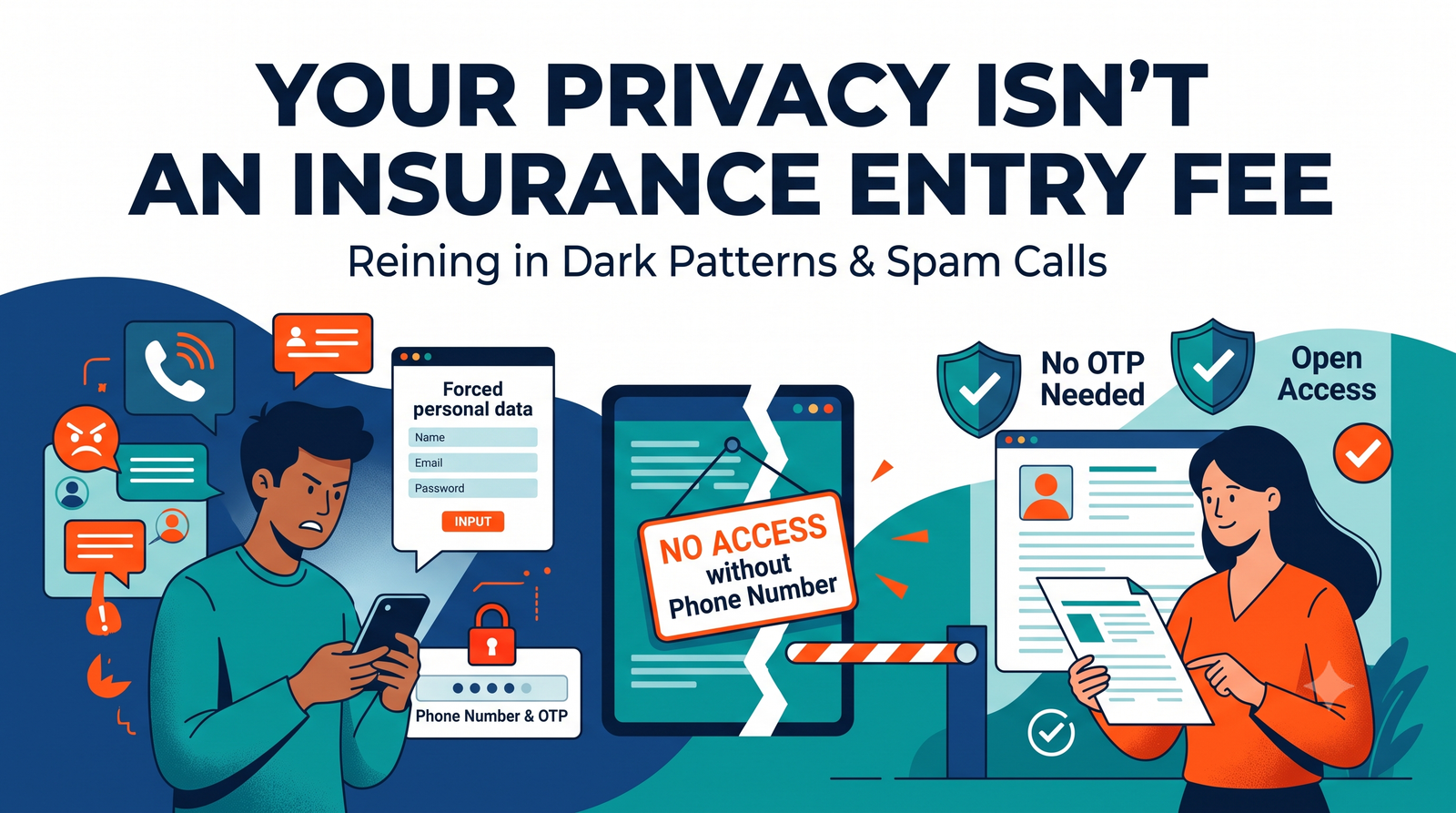
- No Data Ransom: Platforms cannot mandate a phone number, email address, or OTP before allowing consumers to view or compare quotes.
- Transparent Comparison: Aggregators must offer unbiased, side-by-side product comparisons to empower consumers to evaluate policies at their own pace.
Unmasking the 5 Insurance “Dark Patterns”
The consultation paper shines a spotlight on specific manipulative UX/UI tactics that mislead buyers:
| Dark Pattern | How It Works | Real-World Consumer Impact |
| 1. Data Capture Walls | Demands contact details and OTP verification upfront before displaying any quotes. | Triggers unrelenting telemarketing calls and spam messages. |
| 2. Pre-Ticked Selections | Checkboxes for expensive riders (e.g., accidental cover, critical illness) come pre-selected at checkout. | Inflates the final premium unless the buyer painstakingly unchecks each option. |
| 3. Fabricated Urgency | Artificial timers such as “Offer expires in 12 minutes” or “Only 2 spots left at this price”. | Pressures buyers into impulsive decisions before reading policy exclusions. |
| 4. Hidden Cost Drip | Displays an artificially low premium early on, tacking on fees and taxes only at payment. | Masks the genuine annual cost and makes true comparison difficult. |
| 5. The Cancellation Maze | Purchasing takes two clicks, but cancelling or turning off auto-renewal is buried in hidden menus. | Traps policyholders into recurring renewals through synthetic friction. |
Why This Reform Changes the Entire Buying Dynamic
In India, insurance has historically functioned as a “push” product rather than a “pull” product. Intermediaries and aggregators often push the policies offering them the highest distribution commissions, rather than the product that best matches a family’s financial security.
Once aggressive sales pipelines capture your phone number, agents subject you to relentless follow-ups. Worn down by persistent calling, many consumers end up buying ill-fitting policies simply to make the calls stop.
Personal data privacy in a digital economy is not a privilege; it is a fundamental safeguard. Finding the right health or life insurance plan should rely on clear information, objective comparison, and independent judgment—not high-pressure sales scripts.
What Lies Ahead?
This consultation paper represents a draft proposal open for public, industry, and stakeholder feedback until October 25, 2026. If finalized into binding regulations, it will shift power back where it belongs: to the consumer. You should never have to surrender your personal phone number as the price of admission just to see a price tag.