Say ‘Yes’ on the Phone and Your Money Could Be Gone.. New Cyber Fraud
In today’s digital banking era, while phones, apps, and online services have made our lives easier, they have also created new types of risks. Recently, the “Yes Scam,” a voice recording fraud, has been a major topic of discussion in India.
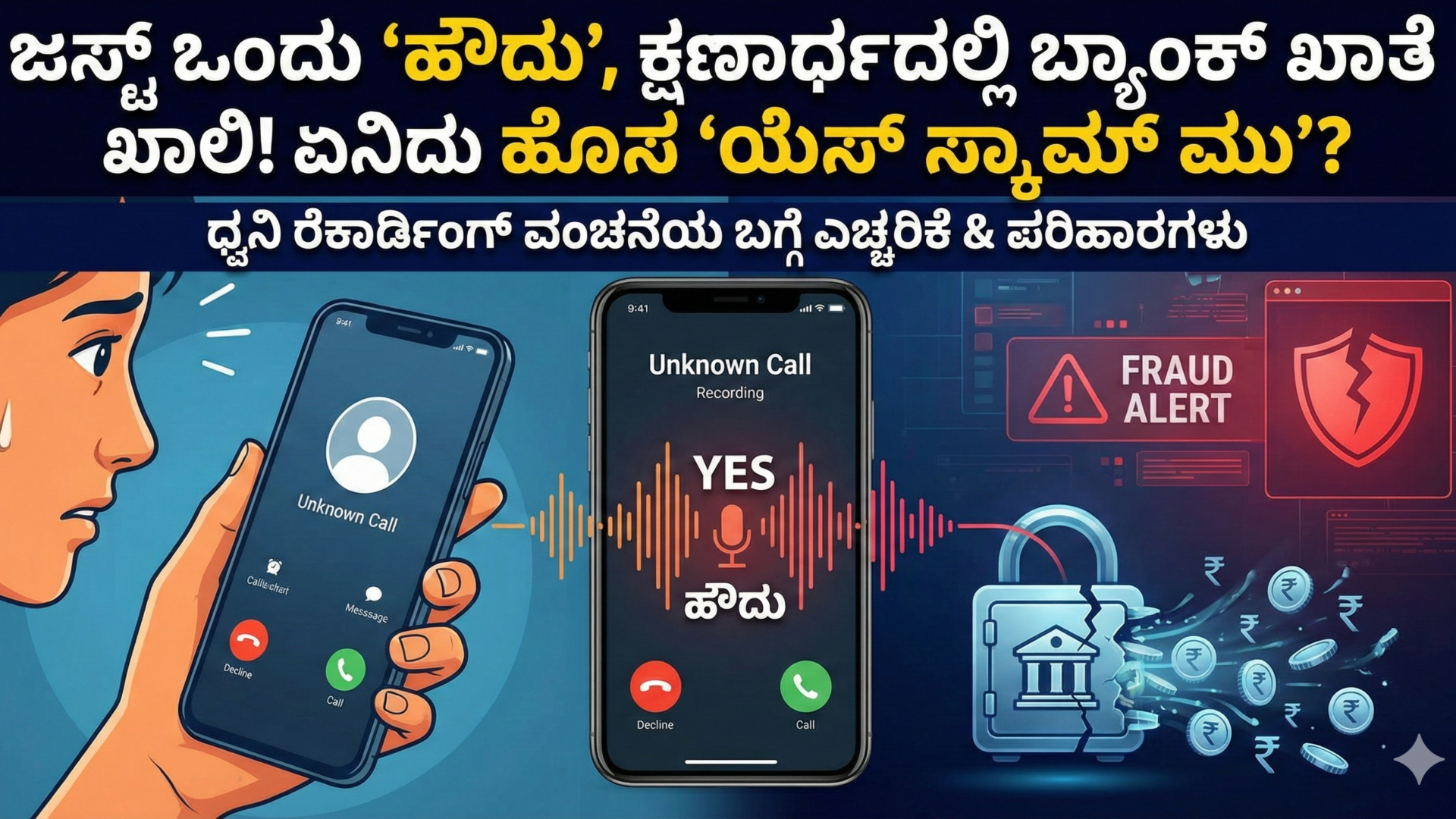
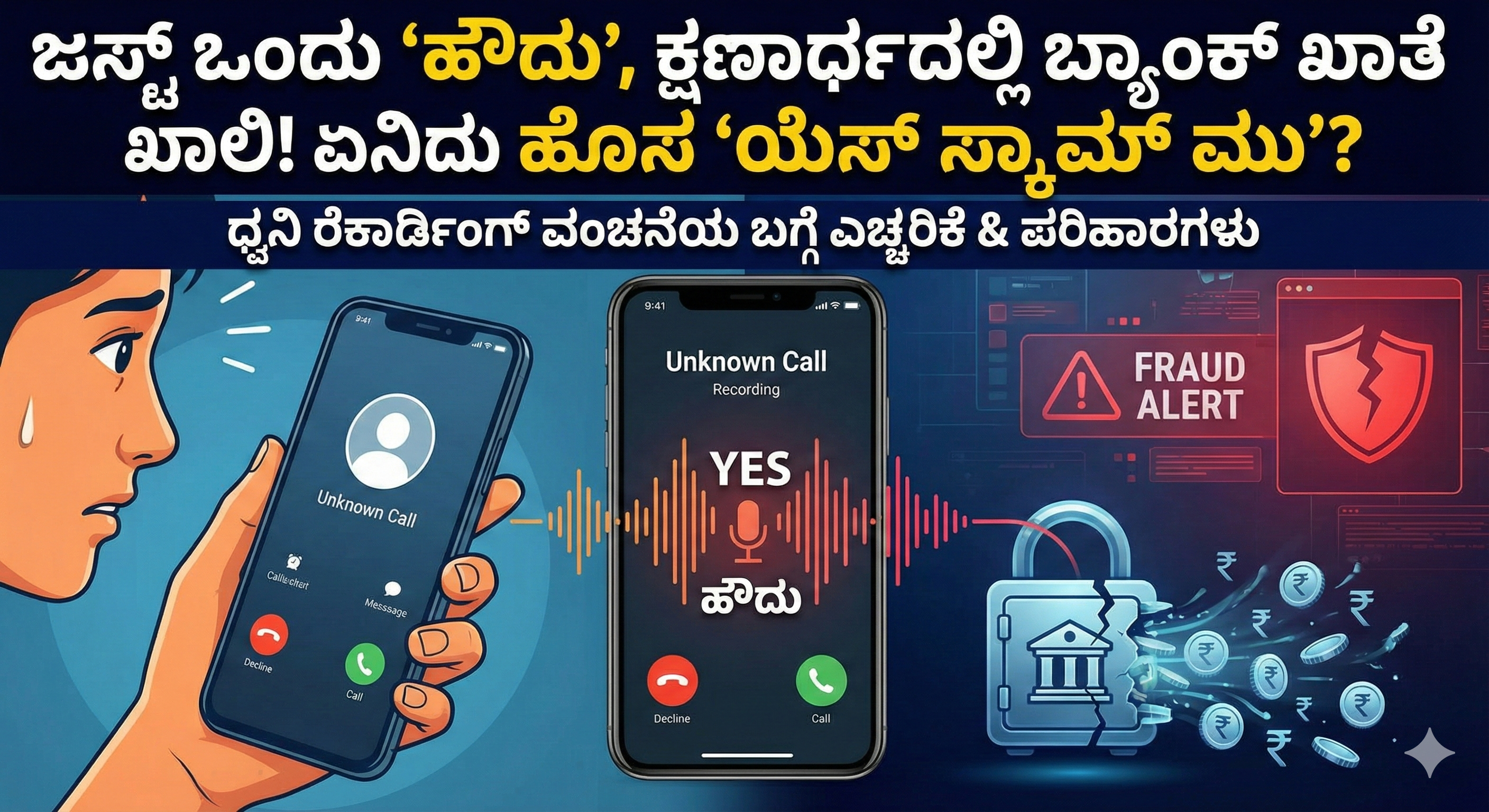
Would you believe that just your voice—specifically the single word “Yes”—could land you in trouble? Unfortunately, it is true. In this fraud, scammers use your voice and your sound of agreement to cheat you or your loved ones, without asking for an OTP or making you click a link.
In this column, I will explain in simple language how this fraud works, how to protect yourself, and what steps to take if you become a victim.
What is the ‘Yes’ Scam and How Does It Work?
It starts very simply. You receive a call from an unknown number. As soon as you answer, the person on the other end asks, “Hello, can you hear me?” or questions like “Are you [Name]?”. Naturally, we answer “Yes”. This is where the trap lies.
The fraudsters record this “Yes” from your voice. They then misuse this recording to:
- Show that you have given permission for a transaction.
- Use it as voice authentication in banking transactions.
- Obtain loans, credit cards, or transfer money.
Using modern technology and Artificial Intelligence (AI), they can even create a clone of your voice. Then, using this clone, they call your friends and family, claiming “I am in trouble, I need money,” to extract funds from them. Check my article on voice cloning to know more.
How to Protect Yourself from ‘Yes’ Scam :-
- Don’t Answer Unknown Calls: Avoid accepting calls from strangers. If it is urgent, they will usually send a message or leave a voicemail.
- Avoid Saying ‘Yes’: Do not use the word ‘Yes’. Instead, develop the habit of asking a counter-question (like “Who is this?” or “What do you want?”).
- Use Blocking Apps: Use a call blocking app with good ratings to identify and block spam calls.
- Be Suspicious: If a call seems suspicious, hang up immediately or answer only after verifying the caller.
- Set a Secret Code: Agree on a secret word with your family for emergencies. If the caller cannot say the word, assume it is a fraud.
- Verify Money Requests: Before sending money to anyone claiming to be in trouble, call them or their close relatives directly to verify.
- Monitor Accounts: Check your banking transactions regularly. If you see unexpected activity, inquire immediately.
- Protect Personal Data: Never share your Aadhaar, PAN, account number, CVV, OTP, or any personal information over the phone.
What to Do If You Are a Victim?
- Report Immediately: Call the national cyber helpline at 1930 or file a complaint on the official cybercrime website www.cybercrime.gov.in or at your nearest police station.
- Contact Your Bank: Inform your bank immediately, get your account and cards temporarily blocked, and change your passwords and PINs.
- Report the Number: Report the fraudulent call on the Department of Telecommunications’ Sanchar Saathi portal www.sanchaarsaathi.in under the ‘Chakshu’ option.
